
Patient Resources
Get Healthy!
FDA Declines to Review Moderna’s mRNA Flu Vaccine Application
- February 12, 2026
- Carole Tanzer Miller HealthDay Reporter
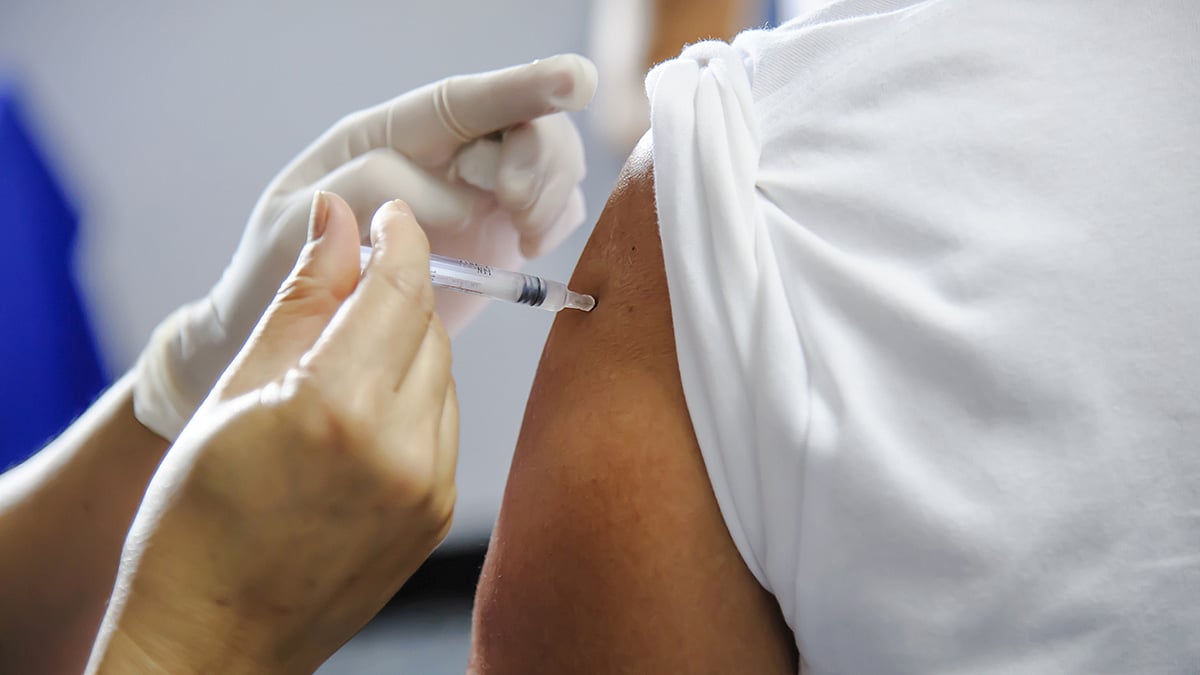
In a major blow to vaccine development, the U.S. Food and Drug Administration (FDA) said it will not review Moderna’s application for the first mRNA-based flu shot.
Dr. Vinay Prasad, the nation’s top vaccine regulator, told the company it lacked an "adequate and well-controlled" study, Moderna said in a statement earlier this week.
"We’re trying right now to reach out to the FDA and understand what would be necessary for them to start reviewing the submission," Moderna President Stephen Hoge told The Washington Post.
The Massachusetts-based company said in a news release that it had compared the vaccine with Fluarix, an approved standard-dose flu shot.
It added that Prasad’s letter did not express concerns about the safety or effectiveness of the shot, which Moderna intended for use among adults age 50 and older.
Andrew Nixon, a spokesman for the U.S. Department of Health and Human Services (HHS), told The Post in an email that the FDA "generally does not comment on regulatory communications to individual sponsors."
Using mRNA allows for quicker development of vaccines.
During the COVID-19 pandemic, Moderna used the technology to develop one of the first vaccines available in the U.S. -- which President Donald Trump then described as a "modern-day miracle."
While traditional vaccines are based on a weakened virus, mRNA vaccines instead use a molecule called messenger RNA that the body recognizes as foreign. It prompts production of antibodies that allow the body to respond quickly if exposed to the virus itself.
Since taking office, Health Secretary Robert F. Kennedy Jr., a longtime vaccine skeptic, has canceled roughly $500 million in federal grants and contracts for mRNA-related projects.
Last fall, Prasad outlined a more rigorous vaccine approval process, and urged the U.S. Food and Drug Administration (FDA) in an internal email to rethink its framework for annual flu shots. He said larger studies should be required for approval of some shots.
The company said the FDA sent a "refusal to file" letter on Feb. 3 calling its application "inadequate for review." Such letters are rare, according to a 2021 study in JAMA Internal Medicine.
To test the safety and effectiveness of its mRNA flu shot, Moderna conducted two Phase 3 trials.
In one trial, more than 40,000 participants got the experimental shot or a standard flu shot. Another trial compared the mRNA vaccine to a standard shot and the high-dose shot recommended for seniors.
Moderna said its new flu shot has been cleared for review in Australia, Canada and the European Union. It has asked to meet with the FDA.
In May, the U.S. Department of Health and Human Services (HHS) pulled funds for Moderna to develop a bird flu vaccine.
In August, HHS announced plans to wind down $500 million in mRNA projects.
"We’re moving beyond the limitations of mRNA and investing in better solutions," Kennedy said in a statement at the time.
In January, Moderna CEO Stéphane Bancel told Bloomberg TV that the firm would step investing in late-stage vaccine trials that are a key part of approvals.
"You cannot make a return on investment if you don’t have access to the U.S. market," he said.
More information
The National Library of Medicine has more about mRNA vaccines and how they work.
SOURCE: The Washington Post, Feb. 10, 2026
